
Moving to the Algarve as an American is absolutely doable and the key things to know upfront are: you’ll need the right visa path (most commonly D7 and Digital Nomad, D8 visas), a realistic 6–12 month timeline, and a budget that reflects today’s competitive coastal housing market, especially in prime towns like Lagos, Vilamoura, Tavira, and Faro (the capital of the Algarve). Expect Portugal to feel safer and slower-paced than many US cities, but don’t assume “cheap”: rentals can be tight, necessary paperwork for Americans moving to Portugal can take longer than one would expect, and you’ll likely want private health insurance at least at the beginning. If you only read one thing, focus on choosing the right base town for your daily life. Think walkability vs needing a car, year-round services, seasonality, then build your plan around housing and documents early, everything else becomes much easier after that.
Fox Real Estate, a Lisbon-based relocation and property consultancy, has helped many Americans navigate exactly this move.
Key Takeaways
- Visa path: Most Americans move to the Algarve via the D7 (passive income), D8 (Digital Nomad), or Golden Visa, alongside tax incentives like NHR 2.0.
- Budget: A comfortable couple renting should plan for roughly $2,800–$4,500/month; families often need $4,000–6,500.
- Timeline: A realistic planning window is 6 to 12 months from decision to settled.
- Housing reality: Long-term rental inventory is tight in popular towns, Portugal is not “cheap,” especially in prime coastal areas.
- Car or no car: Most people need one, unless based in a walkable center like Lagos or Tavira.
- Best towns: Lagos for active remote workers, Tavira for calm and retirees, Faro for year-round urban services and airport access.
- Healthcare: Lower out-of-pocket costs than the US for routine care, but public wait times can be longer, private insurance recommended early on.
- Biggest mistake to avoid: Choosing a town based on a single vacation trip, and underestimating how long paperwork takes.
Interview with Roshe and Sheila (From USA to living in Algarve, Portugal)
Dreaming about a calmer, healthier life by the sea—without giving up convenience? In this interview, Roshe and Sheila share their real, unfiltered story of relocating from the U.S. to Portugal’s Algarve—and why they “fell in love” the moment they arrived.
In this episode, you’ll hear:
- Why the Algarve’s warm climate and “300 days of sunshine” can be a game-changer (especially if you’re seeking comfort and wellness)
- What it actually feels like to live somewhere slow-paced—where people “live to work, not work to live”
- How they chose a quieter area near VRSA / Vila Real de Santo António for long, open beaches, dunes, and space
- Why a scouting trip matters (and how they planned theirs—Airbnb, rental car, and intuition)
- The relocation reality check: paperwork, stress, and why having a trusted local team makes everything easier
If you’re considering relocating to Portugal—especially the Algarve—this is the kind of honest personal story that helps you picture what life could look like after the move.
Considering your own scouting trip to the Algarve?
Fox Real Estate can help you explore the right towns, lifestyle fit, and next steps so you can relocate with clarity (and a lot less stress).
Table of Contents
1. Why Expats and Americans are choosing Algarve vs. Lisbon right now
Americans are moving to the Algarve because it offers a rare combination of coastal lifestyle, safety, and a slower pace, without sacrificing modern infrastructure or international community.
If you are an American thinking about relocating to Portugal, the Algarve usually shows up for one simple reason: day-to-day life can feel easier here.
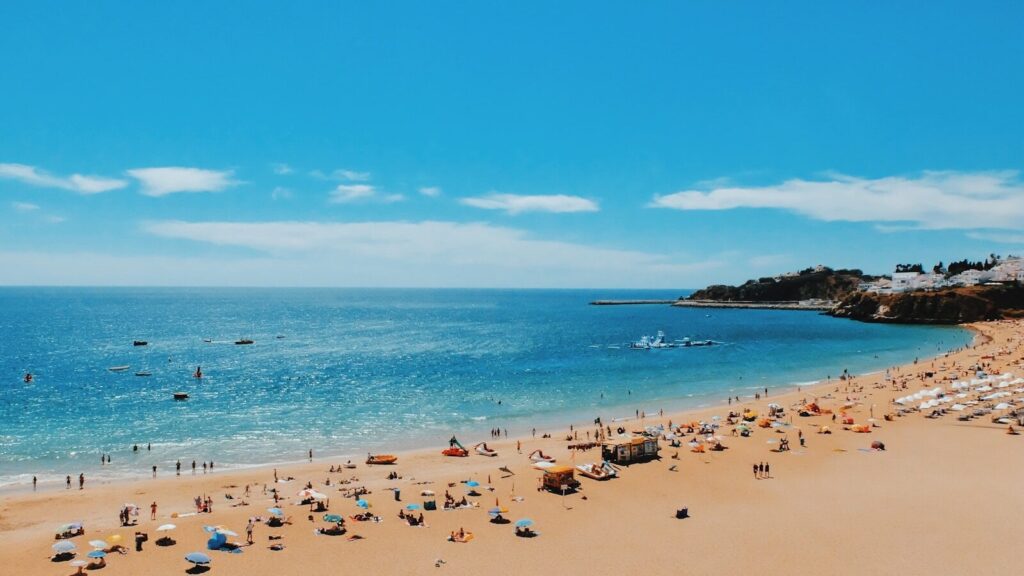
You get a coastline that is genuinely beautiful, towns with real infrastructure, and a slower pace without feeling “remote.” For many Americans, it is the mix that clicks: sunshine, safety, walkable centers, and a strong expat community, plus direct access to larger hubs like Lisbon when you need it.
Choosing between the Algarve vs. Lisbon often comes down to lifestyle. While Lisbon offers a vibrant capital city with a thriving business scene, international schools, shopping options and rich cultural attractions, the Algarve is known for its year-round sunshine, stunning beaches, relaxed pace of life, renowned golf courses and welcoming international community.
While inland villages and lesser-known areas can offer excellent value, sought-after coastal destinations such as Quinta do Lago, Vale do Lobo, Vilamoura, and Lagos are home to some of Portugal’s most desirable, and premium-priced properties. Whether you’re looking for a beachfront villa, a lock-up-and-leave apartment, or a peaceful countryside retreat, the Algarve offers a diverse property market to suit a wide range of lifestyles and investment goals.
Still exploring where to settle in Portugal? Before making your decision, compare the Algarve with Portugal’s other most popular destinations for international buyers. Read our in-depth guides to living in Porto and moving to the Silver Coast to discover how each region compares in terms of lifestyle, property prices, climate, community, and investment potential, helping you find the area that’s the best fit for your goals.
The Algarve has become one of the most popular destinations for U.S. retirees, remote workers, families, and investors seeking a high quality of life in Portugal.
What people are actually moving for
- Lifestyle that fits real life: mornings at the beach, afternoons in a café, evenings out without planning two weeks ahead.
- Safety and peace of mind: Portugal is widely viewed as safe, and many newcomers feel comfortable walking around at night in most towns.
- A manageable size: you can explore a lot of the region without turning every errand into a road trip.
- Community: you will find Americans, Canadians, Brits, Irish, French, Dutch, and more, especially in the central and western Algarve.
Who it is best for (and who might struggle)
Algarve is often a great fit if you:
- want a coastal lifestyle but still need modern services
- plan to retire, semi-retire, or work remotely
- like a friendly international vibe and do not mind hearing English in daily life
You may struggle if you:
- want a fast-paced city with big cultural institutions every night
- need frequent in-person business networking in a major metro
- cannot handle seasonal swings (summer crowds, quieter winters)
Timing: why “right now” feels different
A few trends have been pushing interest up:
- more remote and flexible work options
- Americans looking for a “Plan B” lifestyle and residency options
- rising costs in many US metros, making comparisons feel more compelling
Important note: demand has increased in popular areas, so the best homes (especially rentals) move quickly. If you wait until you arrive to “see what’s available,” you may end up with fewer choices.
2. Last updated, August 2026, popular visa options for Americans, D7 (passive income), NHR 2.0 (IFICI), D8 Digital Nomad, D2 for entrepreneurs, Golden Visa
Americans relocating to the Algarve typically qualify through one of four main paths: the D7 passive income visa, the D8 Digital Nomad visa, the Golden Visa, or another suitable visa route, often combined with a tax-incentive program like NHR 2.0.
Visas change over time, and rules can shift. This section is a practical overview, not legal advice. Always verify current requirements with an immigration professional before you commit.
D7 visa (often called the passive income visa)
Good for: retirees, investors, people with steady non-salary income (pensions, dividends, rental income).
What usually matters: proof of ongoing income, accommodation plan, clean background checks, and organization. The D7 is paperwork-heavy, but very doable if you prepare.
Common mistakes:
- underestimating documentation requirements (bank statements, translations, apostilles)
- not having a realistic housing plan
- waiting too long to start gathering documents in the US
D8 Digital Nomad visa
Good for: Americans earning active income from outside Portugal (remote job or freelance), who want a clear “work remotely” path.
What usually matters: proof of income level, contracts or employer letter, and a clear paper trail.
Common mistakes:
- mixing “remote work” and “local Portuguese employment” expectations
- submitting inconsistent income documentation
D2 Entrepreneur Visa
Good for: entrepreneurs, business owners, freelancers, consultants, and investors looking to start, relocate, acquire, or expand a business in Portugal.
What usually matters: a well-prepared business plan, evidence that the business is financially viable, sufficient personal funds to support yourself during the initial stages, proof of accommodation, and complete supporting documentation. There is no fixed minimum investment, but the authorities will assess the project’s economic viability and potential contribution to Portugal. Technically, you can open a company in Portugal for 1 Euro.
Common mistakes:
- submitting a business plan that lacks detail or financial projections
- assuming there is a minimum investment amount instead of demonstrating business viability
- failing to provide sufficient evidence of available funds for both the business and personal living expenses
- overlooking supporting documents such as qualifications, professional experience, market research, or client contracts that strengthen the application
Golden Visa (Portugal’s investment route)
The Golden Visa has evolved. Real estate options have changed compared to earlier years. If you are considering this path, treat it as a specialized case: talk to a professional early and confirm what investments qualify today.
Common mistake: assuming “buying any property” automatically qualifies. It may not.
NHR 2.0 (or IFICI successor tax incentive programs)
Portugal’s tax incentive landscape has been changing. People still refer to “NHR,” but newer versions may have different eligibility and timelines.
What to do:
- confirm whether you qualify based on profession, residency status, and timing
- plan taxes with a cross-border accountant
Typical timeline expectations (realistic range)
Many Americans underestimate how long things take. A practical planning window is often 6 to 12 months from “we are serious” to “we are settled,” depending on visa type, document readiness, and housing.

3. Cost of living, in dollars, vs US cities (Los Angeles, San Francisco, NYC, Austin, Miami, Atlanta, Chicago, etc.)
A comfortable couple renting in the Algarve should budget roughly $2,800 to $4,500 per month, with families typically needing $4,000 to $6,500. Note that private education in Portugal can push up this estimate.
There is no single “Algarve cost of living.” It depends on where you live, whether you rent or buy, how often you dine out, and whether you run a car or prefer to walk everywhere and use local mass transport.
A good comparison framework is to break costs into three buckets:
- Housing (biggest swing)
- Lifestyle (restaurants, gyms, activities)
- Monthly obligations (insurance, car, schooling)
Example monthly budgets (for planning only)
These are illustrative ranges, not guarantees.
- Comfortable couple, renting: $2,800 to $4,500/month
- Family of four, renting: $4,000 to $6,500/month (more if international school tuition is included)
- Retiree couple, simpler lifestyle: $2,200 to $3,500/month
How it compares to US cities
A practical way to think about it:
- If you are coming from Los Angeles, Miami, or Austin, many day-to-day costs may feel lower in Algarve, but housing in prime areas can still surprise you. Proximity to the beach usually goes with higher property values.
- If you are coming from Atlanta or mid-cost cities, the “savings” can depend heavily on your rent, your car needs, and how international your lifestyle is.
The trap Americans fall into
One of the biggest misconceptions we hear from Americans considering a move to Portugal is, “Portugal is cheap.” The reality is far more nuanced.
While Portugal can still offer excellent value compared to many major U.S. cities such as New York, San Francisco, Boston, or Miami, the Algarve is one of the country’s most sought-after regions. Its exceptional climate, award-winning beaches, international community, golf courses, and high quality of life have attracted buyers from across Europe and North America for decades. As demand has increased, so have property values in many of the region’s most desirable locations.
It’s important to approach your property search with realistic expectations and plenty of research. Rather than relying on social media headlines or anecdotal stories, spend time exploring local property portals such as Idealista.pt to compare asking prices across different towns and neighborhoods. You may be surprised by how much prices can vary between destinations just 15 or 20 minutes apart. A beachfront apartment in Vilamoura, Quinta do Lago, Lagos, or Carvoeiro will command a very different price than a similar property in a quieter inland village.
One of the Algarve’s greatest strengths is the diversity of its real estate market. Whether you’re dreaming of a traditional Portuguese townhouse in a historic village, a contemporary apartment within a resort-style condominium complete with swimming pool, gym, landscaped gardens, and 24-hour security, a sleek modern villa with sea views, or a character-filled quinta surrounded by countryside and land, the region offers something for virtually every lifestyle and budget.
For buyers with more modest budgets, don’t rule out the Algarve altogether. Some of the best opportunities can still be found just beyond the coastline. Charming inland villages and lesser-known communities often offer significantly better value while remaining within a 15 to 20-minute drive of beaches, marinas, restaurants, golf courses, and the region’s main towns. These hidden gems provide the opportunity to enjoy the Algarve lifestyle without paying a premium for a frontline coastal address.
The key is to define your priorities before beginning your search. If your dream is to walk to the beach every morning, expect to pay accordingly. If you’re happy to trade a short drive for more space, privacy, or a larger plot, the Algarve opens up a much broader range of possibilities. With the right guidance and a clear understanding of the local market, many buyers discover that their ideal property simply lies in a different location than they first imagined.
4. Property market (buying and renting)
The Algarve property market is diverse but competitive, with long-term rental inventory especially tight in popular towns like Lagos, Tavira, and Faro. Unless you’re sure where you want to live, our recommendation is to rent for one year before making the property purchase decision.
Algarve has a diverse property market: modern apartments near marinas, classic townhouses in historic centers, villas with pools, countryside homes, and new developments.
Renting: what to know upfront
- Inventory can be tight in popular towns.
- Long-term rentals (12 months) are different from seasonal or holiday rentals.
- Landlords may ask for strong documentation and multiple months upfront, especially for newcomers without Portuguese income history.
Buying: the big-picture process
Portugal’s buying process is generally structured, but it is different from the US.
Most buyers will:
- get a Portuguese tax number (NIF)
- open a bank account (often helpful)
- work with a buyer’s agent to shortlist areas and properties
- do legal checks and due diligence before signing final deeds
A simple “how to evaluate” checklist
Use this as your first filter when viewing homes:
- Location fit: daily errands, beach access, schools, medical, airport distance
- Noise and seasonality: summer traffic, nightlife zones, construction patterns
- Sun orientation: morning vs afternoon sun matters more than people expect
- Build quality: insulation, windows, damp risk, maintenance history
- Condo costs: HOA-style fees (if applicable) and what they cover
- Internet reality: ask for speed tests if you work remotely
- Resale and rental potential: even if you plan to stay, future flexibility matters
Common mistakes in Algarve property searches
- choosing a town based on a single vacation week
- ignoring micro-locations (one street can change noise, parking, and walkability)
- assuming “close to the beach” always means “easy day-to-day living”
5. Healthcare, the honest comparison
Portugal’s healthcare often costs less out-of-pocket than the US for routine care, but public wait times for specialists can be longer, so most newcomers start with private insurance.
Many Americans are pleasantly surprised by Portugal’s healthcare, but it helps to set expectations.
What often feels better than the US
- lower out-of-pocket costs for many routine needs
- easier access to basic appointments in many areas (especially private clinics)
- pharmacies are highly functional and helpful
What can be frustrating
- public system wait times for certain specialties or non-urgent procedures
- administrative steps that feel slower than what Americans expect
- language comfort varies depending on clinic and location
Practical newcomer tips
- Plan for a private health insurance policy, at least early on.
- Ask your relocation consultant to help you apply for the SNS (Portugal healthcare patient number)
- Identify a local private clinic and a primary doctor soon after arrival.
- Keep a personal medical file: prescriptions, diagnoses, vaccination records.
- Our top tip is to speak to an insurance broker, like Ged Insurance, to help you select a health insurance suited for you. Check out Serenity if you want to have a dedicated healthcare concierge.
6. Banking, finances & moving money from the US
Relocating to the Algarve or anywhere else in Portugal requires a Portuguese tax number (NIF) and a local bank account before you can handle rent, utilities, or property purchases smoothly. Money logistics are usually the “hidden stress” of relocation, don’t let it be an afterthought.
What you will likely need
- a NIF (Portuguese tax number), can be obtained within a few days through a third party for non-European citizens
- a Portuguese bank account for rent, utilities, and local payments is essential. From abroad, it can be obtained by a third party and the process can take a little longer because of compliance.
- a reliable way to transfer funds (bank transfer, specialist transfer services like Wise or Currencies Direct)
Moving money: practical guidance
- Compare exchange rates and fees before transferring large amounts.
- If you are buying property, plan transfers in stages and document sources of funds.
- Keep records. In cross-border situations, the question is often not “is this allowed,” but “can you document it clearly.”
Taxes (high level, not advice)
US citizens have US tax responsibilities even when living abroad. Portugal also has its own tax system. The right setup depends on your income type (employment, freelance, dividends, retirement).
Plan to speak with a cross-border tax lawyer who understands both the US and Portuguese systems.
Important note: accountants in Europe do not have the same role as in the US, this is why our recommendation is to speak to a tax lawyer vs. an accountant.
7. Working remotely vs. retiring in Algarve
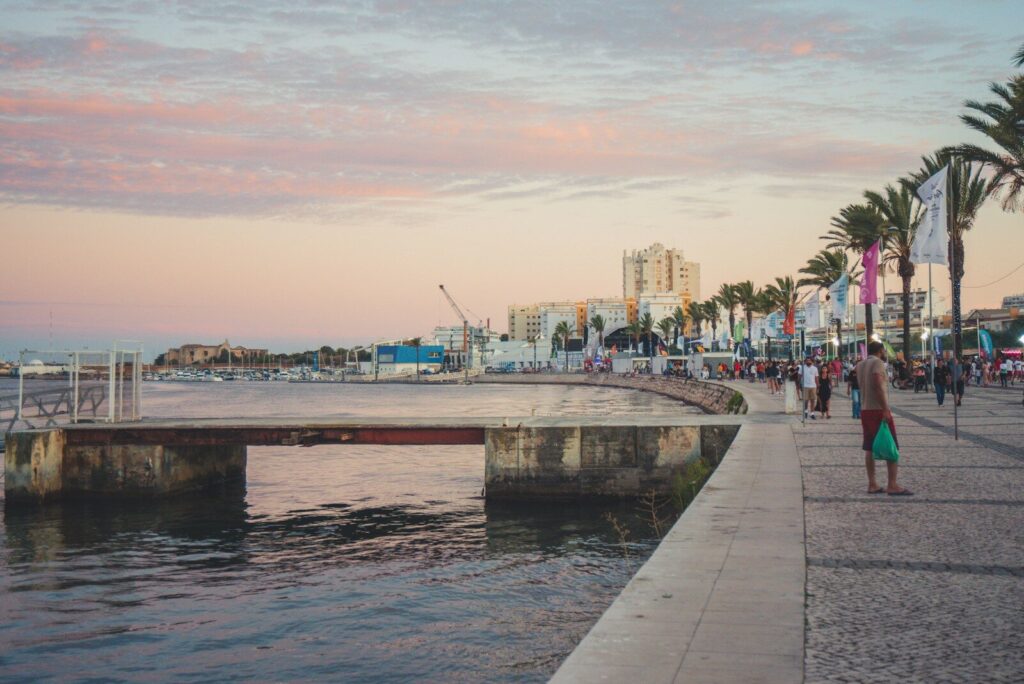
The Algarve supports both remote work and retirement well, but the right town depends on whether you prioritize fast internet, airport access, or walkability.
Remote work reality
- Many areas have solid fiber internet, but do not assume. Confirm.
- Coworking options are growing, especially in hubs like Lagos and Faro area.
- Your daily rhythm will change. Many people end up doing deep work early, then living life outside in the afternoon.
- Coliving spaces are trendy and some local brands like Pomar are expanding.
Retirement considerations
- Think through access to healthcare, stairs, walkability, and long-term convenience.
- Consider whether you want to be near an international airport (Faro) or do not mind longer drives.
- Build a realistic plan for how often you will visit the US and how you will handle long trips.
- Community matters! Based on your preferences, look up dedicated Facebook group to find your community out there.
8. Getting around, do you need a car?
Most people relocating to the Algarve need a car, unless they live in a walkable town center like Lagos or Tavira to name a couple and rarely explore beyond it. In short, often, yes. But not always.
If you live in a walkable town center
In places like Lagos center, Tavira center, or parts of Portimão, you can do a lot on foot. You may still want a car for beaches, hikes, and exploring. From experience, it is not unusual to see expats renting a car for a week at a time whenever they want to explore other areas or need one temporarily for some specific reasons.
If you choose a villa area or countryside
A car becomes close to essential!
Practical guidance
- If you plan to commute regularly or explore beaches beyond your town, budget for a car.
- If you prefer a simple life with less driving, choose a town where daily errands are walkable. There are plenty.
9. International & American community
Americans moving to the Algarve will find an established international community, especially through local Facebook groups, coworking spaces, and sports clubs. You will not be “the only American.” The bigger question is what kind of community you want.
Where people connect
- Local Facebook and WhatsApp groups (town-specific)
- Coworking spaces and language exchanges
- Sports clubs: tennis, golf, paddle, pickleball, surfing, hiking groups
- Volunteer organizations and charity events
Cultural integration tips that actually work
- Learn survival Portuguese early (greetings, numbers, appointments, ordering your coffee the way you like it), these will go a long way.
- Choose one local routine: same café, same market, same gym.
- Avoid comparing everything to the US out loud. People notice.
10. International schools & education
Families relocating to the Algarve should choose housing around school access first, since commute times and admissions timelines shape the entire move.
How to choose a school
- Start with your non-negotiables: curriculum, class size, support services, language approach.
- Ask about real commute times during peak traffic.
- Clarify admissions timelines and waitlists.
Questions to ask (bring this to tours)
- What is the student mix (local vs international)?
- What support exists for English-first students?
- What are the yearly fees and extra costs?
- How do they handle transitions to US or UK universities?
Typical tradeoffs
- Closer to school often means higher rent.
- Larger school communities can mean better activities but more competition for spots.
11. Neighbourhoods and towns breakdown
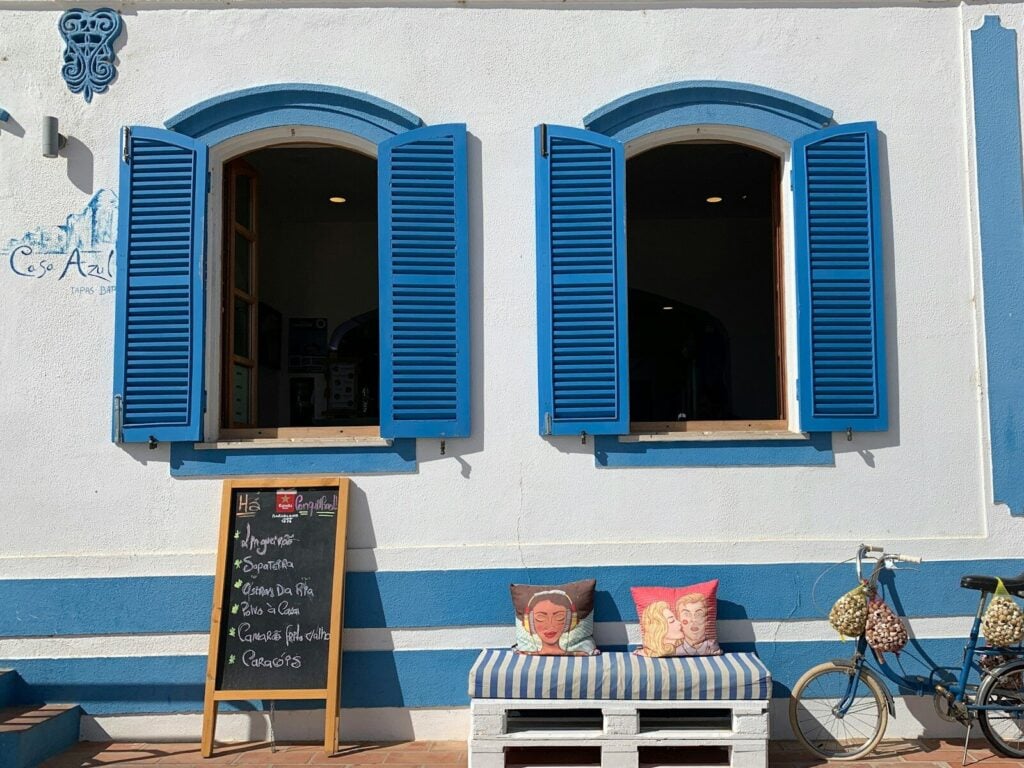
The best Algarve town depends on lifestyle: Lagos suits active remote workers, Tavira suits retirees seeking calm, and Faro suits those who want year-round urban services and airport access. At least, this is our observation. Most prefer either the Eastern side, the Central area around Faro or the Western-side.
The Algarve is not one vibe. Here are practical snapshots to help you narrow your shortlist.
Lagos
Best for: remote workers, active lifestyle, families who want a lively but manageable town.
Vibe: beach town energy with restaurants, marinas, and a strong international community.
Price level: medium-high in prime areas.
Pros: great beaches, walkable center, lots of community.
Cons: summer crowds, parking pressure in peak season.
Tavira
Best for: couples, retirees, people who want a calmer, traditional feel.
Vibe: charming, slower pace, historic center, easy access to beaches via short travel.
Price level: medium to medium-high.
Pros: beautiful town, relaxed atmosphere.
Cons: quieter nightlife, fewer “big city” services.
Faro (and nearby)
Best for: people who want airport access, year-round local life, and a more urban hub.
Vibe: university city, more local rhythm, less “resort” feel.
Price level: medium.
Pros: transport links, services, more year-round activity.
Cons: not the classic “beach postcard” living unless you drive to the coast.
Portimão
Best for: value seekers, families, people who want a larger town with services.
Vibe: practical, modern, more residential.
Price level: medium, with pockets of higher pricing near the coast.
Pros: strong amenities, shopping, healthcare access.
Cons: some areas feel less “charming” than smaller towns.
Albufeira
Best for: people who want a central base, investors (in the right micro-areas), and those who like a busier scene.
Vibe: energetic, tourist-heavy in peak season.
Price level: medium to high depending on area.
Pros: central location, lots of rental activity.
Cons: seasonal noise in nightlife zones. Choose micro-location carefully.
Loulé (and countryside nearby)
Best for: people who want a more local lifestyle with space, while staying close to coastal hubs.
Vibe: traditional town with a famous market, plus countryside living options.
Price level: medium.
Pros: authenticity, access to both inland and coast.
Cons: car usually needed for daily life if you live outside the center.
We could also name Moncarapacho, São Bras de Alportel, Boliqueim, Porches and Alvor as towns that start to attract more and more newcomers, each for different reasons.
12. The honest truth, what nobody tells you
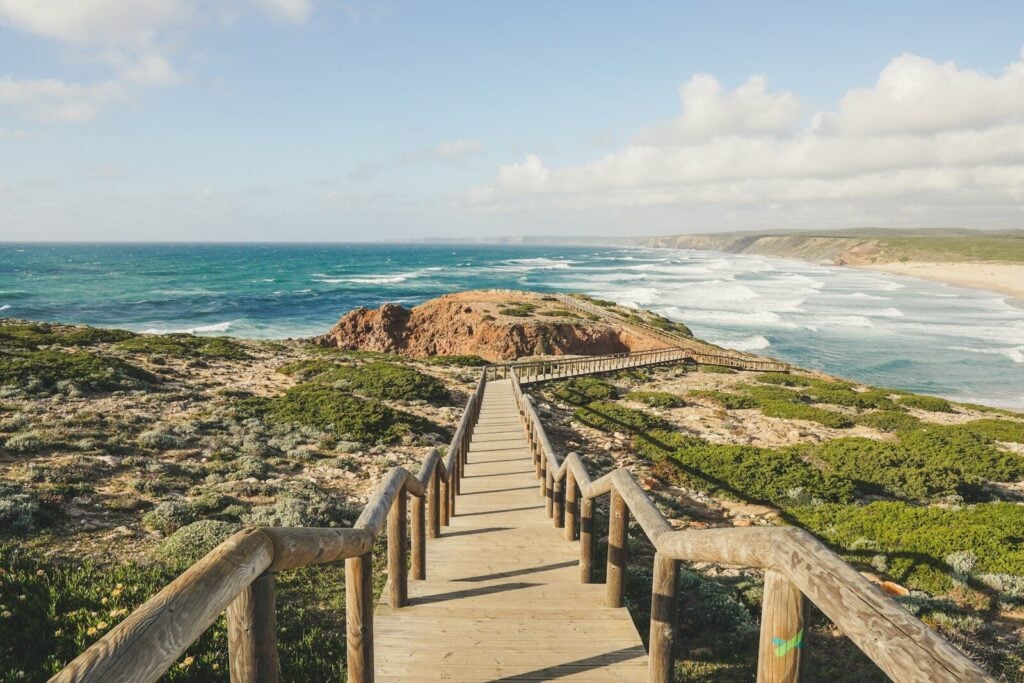
The most common misconception about the Algarve is that it’s cheap; in reality, prime coastal towns have become increasingly competitive and paperwork takes longer than most Americans expect.
Relocating goes smoothly when you plan for reality, not just the dream.
- Summer Algarve is not “quiet coastal living.” It is busy. Plan your first housing decision with seasonality in mind.
- Rentals can be harder than buying in prime areas. Long-term inventory is limited, and good options move fast.
- Paperwork is the price of entry. Expect forms, appointments, and waiting. Build buffers into your timeline.
- Not everyone speaks English in every office. In tourist zones, yes. In admin situations, it varies.
- Driving styles and road rules will feel different. Budget time to adjust and consider driver’s license steps early.
- Houses can feel colder in winter than Americans expect. Insulation and heating vary widely. Ask about it.
- You may miss US convenience. Amazon-like speed is not the default. You adapt, but plan for it.
- Making friends takes intention. Community exists, but you still need to show up consistently.
13. Climate & lifestyle (short)
The Algarve’s sunny, long outdoor season makes daily life more active, though newcomers should expect a slower service pace that takes a few months to adjust to.
Located at the Southern tip of Portugal, the Algarve benefits from a sunny climate with a long outdoor season. Daily life often becomes more active: walks, beach time, markets, and meals outside.
The practical adjustment is learning the local rhythm: slower service, longer lunches in some places, and a more relaxed pace. It can be a feature, not a bug, but it takes a few months to feel normal.
14. Pros & cons table
The Algarve’s biggest advantages are its coastal lifestyle, accessibility and international community, while its main drawbacks are seasonal crowding and competitive housing in prime areas.
| Pros | Cons |
|---|---|
| Coastal lifestyle with real infrastructure | Summer crowds and seasonal pricing |
| Strong international community (easy to plug in) | Integration still takes effort and time |
| Many day-to-day costs can be lower than major US metros | Prime-area housing can be competitive and expensive |
| Good access to private healthcare options | Public system wait times can be longer for non-urgent care |
| Great for remote work and retirement routines | A car is often needed depending on where you live |
15. How Fox Real Estate can help
Relocation is not just finding a beautiful home. It is aligning your visa path, your budget, your timeline, and the right micro-location so daily life works.
At Fox Real Estate, we help Americans not only relocate to Portugal but with a practical, end-to-end approach, we help them settle in:
- Property search for buying or renting based on your lifestyle, commute, and seasonality needs
- Local guidance on neighborhoods, pricing reality, and what to watch for during viewings
- Support through the immigration and visa process (in coordination with the right professionals)
- Day-to-Day help and support with a local presence on arrival
If you want a shortlist of Algarve areas that match your life, remote work, retirement, schools, walkability, start with a simple call and we will map your options clearly. We can help draft a personalised scouting trip itinerary.
Ready to stop guessing and start planning? Let’s map out your Algarve move on and book a real call, no vacation-brain required.
FAQ
Is the Algarve a good place for Americans to live year-round?
Yes, especially if you choose a town with strong year-round services (healthcare, supermarkets, community). Some areas feel quieter in winter, which many people love. The key is picking a micro-location based on daily life, not just vacation vibes.
Do I need a car in the Algarve?
Many people do, especially if you live outside a town center or want to explore different beaches and inland areas. If you live in a walkable center (like parts of Lagos or Tavira), you can reduce driving a lot, but you will still appreciate a car occasionally.
Is renting hard for newcomers?
It can be. Long-term rental inventory is limited in popular towns, and landlords often prefer strong documentation. Some newcomers need to offer more months upfront or choose a less competitive area for the first year while they get settled.
Can Americans buy property in Portugal easily?
Americans can buy property in Portugal, and many do. The process is different from the US, so it is important to do proper legal checks and understand costs. It helps to work with professionals who regularly support international buyers.
How much money should I budget per month in the Algarve?
It depends mostly on housing and whether you need a car. A comfortable couple renting often plans roughly $2,800 to $4,500 per month, while families may need more, especially with international school costs. Use ranges and adjust after a scouting trip.
What is the best Algarve town for remote work?
Lagos is a common favorite because of community, lifestyle, and amenities. Faro can be great if you want a more local, urban hub and airport access. The “best” choice depends on whether you value walkability, quiet, nightlife, or proximity to schools.
What are the biggest mistakes Americans make when moving to the Algarve?
Common mistakes include choosing a home based on a single summer trip, underestimating paperwork timelines, and not confirming practical details like heating, insulation, and internet quality. The best moves are planned with seasonality and daily routines in mind.
Is healthcare better than in the US?
Many Americans find routine care and private clinic access more affordable than in the US. But it is not perfect. Public wait times can be longer, and admin can feel slower. Most newcomers feel best with private insurance at least for the first phase.
How long does the relocation process take?
A realistic planning window is often 6 to 12 months, depending on your visa path, document readiness, and how quickly you secure housing. Starting early reduces stress, especially for families and anyone on a strict timeline.



0 Comments