
Why Americans are moving to Portugal’s Silver Coast right now.
If you’re an American considering a move to Portugal, the Silver Coast (Costa de Prata) is worth a serious look. It sits in the middle ground between Lisbon’s density and price tag and the full remoteness of rural Portugal, you get real Atlantic beaches, working towns with actual infrastructure, and noticeably more space for your money than Lisbon or Porto.
This guide walks through what we cover with clients every week at Fox Real Estate: which towns fit which lifestyle, what the real visa options are (D7, D8, and where Golden Visa and NHR actually stand today), what things really cost in dollars, and the buying and admin process from NIF to keys in hand.
If you read nothing else, this should be enough to judge whether the Silver Coast fits your budget, timeline, and priorities, and what to do next.
Jump to a section:
Why Expats and Americans are moving to Portugal’s Silver Coast (Costa de Prata) right now
Most Americans looking at Portugal want the same things: safer streets, a slower daily rhythm, and living costs they can actually predict. What sets the Silver Coast apart from the Algarve or Lisbon is balance — real Portuguese towns and Atlantic beaches, without paying capital-city prices for most of it.
Think of it like choosing a livable town just outside a major metro, the way you might weigh a commuter suburb against downtown. You keep airport access and real services, but housing goes further and the pace slows down.
This region tends to be a strong fit if you want:
- A coastal lifestyle without a full resort scene
- A real choice of home types, apartments, townhouses, countryside properties, new builds
- A calmer setting for remote work, raising kids, or retiring
- An all-year-round atmosphere
It’s a weaker fit if you want nightlife every week, need to function entirely in English day-to-day, or want a car-free life in a dense urban core.
Visa options for Americans: D7, D8 (Digital Nomad Visa), and a note on the IFICI (the NHR 2.0)
Visa rules in Portugal move fast, and this section is a practical overview — not legal advice. Before you commit to a path, talk to a qualified immigration professional.
We work closely with a legal team on every visa case we handle. For decisions, contact us and speak to a qualified immigration professional.
D7 visa, passive or stable income
The D7 is generally used by retirees and people with reliable income that doesn’t depend on being physically in Portugal, pensions, dividends, rental income, revenue from running a company.
Good signals:
- Predictable monthly income you can document cleanly
- Consistent bank statements (not a mix of accounts and cash deposits)
- Willingness to line up a Portuguese lease or accommodation plan before applying
Common mistakes we see:
- Under-documenting income sources
- Submitting inconsistent or gappy bank statements
- Waiting too long to open a Portuguese bank account when the process requires one
Typical timeline (high level): budget for several months from preparation to approval, timing can vary by consulate.
D8, the digital nomad visa route
This is the one we talk about most with clients who still have to work a few years before retiring, because it’s the best fit for anyone still earning from a US employer or US-based clients while living in Portugal. Note that is also applies for anyone employed by a company located outside of Portugal and whose employer allows to work fully remote.
Good signals:
- Stable remote employment, or contracts with documented, recurring income
- Income above the minimum threshold set annually by Portuguese immigration authorities (in 2026, currently 4x € 920.00, the current monthjly minimum wage in Portugal)
- Clear separation between personal and business finances
Common mistakes we see:
- Mixing personal and business accounts, which muddies the income documentation
- Assuming you can “figure out” the paperwork after arriving, most of it needs to be sorted before you land and on time for your VFS/Consulate appointment
Where it fits your plans: if you want the option to spend extended stretches in Portugal, not just tourist visits under 90 days, while keeping your US job or business, D8 is usually the right conversation to have first.
Golden Visa, the investment route
Golden Visa has changed substantially in recent years, and this is the section where outdated blog posts cause the most confusion.
What’s changed: Portugal removed real estate purchases as a qualifying investment route in October 2023. You can no longer buy residential property to qualify for a Golden Visa. The remaining qualifying routes are generally fund-based investments, business/job-creation investment, or donations to scientific and cultural projects, not direct property purchase.
Good signals:
- You want an investment-led path to residency and are comfortable with fund or capital-based routes
- Locking in a lump sum of € 500,000.00 for a period of 5 years is ok for you
- You’re not planning to live in Portugal full-time right away
Common mistakes we see:
- Relying on older articles (including, frankly, earlier drafts of guides like this one) that still describe real estate as a qualifying route
- Making an investment commitment before confirming the current eligible categories with a licensed advisor
- Disconsidering other visa routes that may be easier, faster and less costly
NHR is gone, here’s what replaced it
You’ll still hear “NHR” thrown around constantly in expat groups and older content. To be direct about it: the original Non-Habitual Resident tax regime was discontinued for new applicants starting in 2024.
What replaced it is a narrower incentive often referred to informally as “NHR 2.0,” more formally tied to a scheme aimed at scientific research, innovation, and specific qualifying professions (commonly referenced as IFICI). It is considerably narrower than the original NHR, it does not automatically apply to retirees or general remote workers the way people often assume.
Practical takeaway: treat any tax incentive as a “maybe, if you qualify,” not a guaranteed plan, and get a cross-border tax professional involved before you build a budget around it.

Cost of living, in dollars, vs US cities (LA, SF, Austin, Miami, Indianapolis, Boston, Atlanta, etc.)
Cost-of-living comparisons go wrong in two ways: people compare a US city center to a Portuguese suburb, or they forget to count healthcare, travel, and taxes.
Here is a simple framework you can use.
Step 1: Compare lifestyle to lifestyle, not city name to city name:
Pick one of these and compare it to your US baseline:
- Coastal town lifestyle: cafes, beach walks, shorter drives, fewer big-box errands
- University city lifestyle: more culture, students, events, services
- Quiet inland lifestyle: more space, more driving, more self-sufficiency
Step 2: Build a realistic monthly budget (examples)
These are illustrative ranges in USD for a couple. Your exact number will depend heavily on rent or mortgage, schooling, and travel back to the US.
- Lean but comfortable: $2,800 to $3,800/month
- Mid-range: $3,800 to $5,500/month
- Higher comfort + travel + extras: $5,500 to $8,000+/month
What is usually lower than the US:
- Rent for comparable space (outside top hotspots)
- Healthcare out-of-pocket costs
- Everyday dining and services
What tend to surprise Americans:
- Imported goods and electronics
- Private school tuition
- Car costs (purchase prices can be higher than some US states)
- Frequent trips back to the US
A better mental model than city-to-city
Ask:
- “what would my life cost 30–60 minutes outside my US city?”
- “how much am I really spending in the US on insurance, healthcare, and convenience because I’m exhausted?”
That comparison tends to land closer to reality than New York-vs-Nazaré math.
Buying and renting property
The Silver Coast offers real variety: coastal apartments, traditional townhouses, countryside properties, and new developments.
Buying: what Americans should know
In Portugal, the buying process is very doable, but it is documentation-heavy. Move with a checklist, not just a gut feeling.
How to evaluate a property (quick checklist):
- Location fit: daily needs within a realistic drive, not just “Google Maps close”
- Sun and humidity: orientation matters on the coast; ask about moisture and insulation
- Condition and legality: verify documents, past renovations, permits, and boundaries before you fall in love with anything. We highly recommend you to work with a real estate lawyer or a buyer’s agent
- Noise and seasonality: summer traffic and short-term rental turnover can completely change a street’s character
- Resale and rental logic: even a forever-home should make sense on the market
Two misconceptions we hear constantly:
- “Everything is cheap.” Some pockets price like prime US suburbs, Ericeira in peak season, for instance.
- “I’ll just renovate easily.” Labor availability and timelines in Portugal often move slower than US expectations. Planning permissions are also mandatory before getting the work started.
Renting: what to expect
Renting can be genuinely competitive in certain towns, especially for modern homes or long-term leases that allow pets.
Practical tips:
- Have documents ready (ID, NIF, proof of income, references)
- Be clear on lease length and utilities
- If you are arriving first, consider a one-year lease while you learn neighborhoods
Healthcare, the honest comparison
Portugal has both a public system and a strong private option, but Americans need to reset a few expectations.
Better than you might expect
Private appointments are often straightforward to book, and many routine services cost less out of pocket than a typical US copay or deductible.
What can feel frustrating
- Wait times can exist in the public system for certain specialties
- Not every provider will speak English at a comfortable level
How to prepare, a simple prep plan
- Get private health insurance quotes early
- Bring a medical summary and prescriptions documentation
- Plan your first 90 days: primary care setup, dentist, any ongoing medications
Banking, finances & moving money from the US
Good planning here saves real stress later.
What you’ll typically need
- A Portuguese bank account for many processes
- A way to transfer funds efficiently (fees and exchange rates matter)
- A clear system for documenting money movement for visa and compliance steps
Common pitfalls
- Using random transfers without consistent documentation
- Forgetting that timing matters (bank letters, proof of funds, lease payments)
- Assuming taxes are “simple.” Cross-border taxes can be manageable, but not casual.
Important note: This is not tax advice. Talk to a cross-border tax professional before making major moves.

Working remotely or retiring on the Silver Coast (Costa de Prata), Portugal
This region works well for both, but your experience depends heavily on your routine and where exactly you land.
Remote work reality check
Most towns have solid internet, but verify at the exact address before you commit to a lease, and have a backup plan (mobile hotspot, coworking day pass, second provider).
What people who love it here tend to do
- Pick a “home base” town that fits daily life, not vacation life
- Create community early (sports, language classes, expat groups)
- Keep a realistic travel plan to visit family in the US without burning out
For retirees specifically
- Proximity to healthcare and pharmacies matters more day-to-day than the view does
- Stairs, humidity, and winter heating matter more than most people expect before their first Portuguese winter
Getting around, do you need a car?
Often, yes, but not always.
If you live in a town center
Often yes, but not always. You may be able to walk to cafes, groceries, schools, basic services.
You might still want a car for beach access, errands, and exploring.
If you live rural or on the edge of town
A car becomes close to essential.
Practical guidance: choose the home first, then decide. We see Americans buy a car too early, then realize they chose a neighborhood where walking would have worked.
International and American community
You’ll find international communities across the Silver Coast, especially in coastal areas and university-linked cities.
Where people connect
- Local expat and interest groups (hiking, surf, food, parenting), padel tennis and pickleball are increasingly popular
- Many towns have dedicated expat Facebook groups
- WhatsApp is a way of life in Portugal
- Language schools and conversation groups
- Coworking spaces, business meetups and local non-profit associations
Tips to integrate faster
- Learn basic Portuguese phrases early, even if you plan to live mostly in English
- Build relationships with local businesses (your cafe, pharmacy, gym)
- Expect cultural differences in responsiveness and timelines. It is normal.
International schools and education
If you’re relocating with children, schools often decide where you live before anything else does.
What to ask when evaluating a school
- Curriculum and language of instruction
- Admissions timeline and waitlists
- Transportation: how long is the real commute in winter
- Do they have a pick up and drop off service
- Support for transitions and non-native speakers
One thing to flag clearly, because it trips people up: Portuguese schools, including international schools, generally enroll for the full school year, not on a part-year or “à la carte” basis. If your plan involves splitting the year between Portugal and the US, confirm directly with the specific school’s admissions office before you anchor a property search around proximity to it.
Typical tradeoffs
- International options can be excellent, but limited in number in some areas
- Public schools can be a great fit for families committed to language immersion, but the transition varies by child
Towns breakdown
Treat these as vibe-and-fit guidance, pricing varies street by street, so use this to build a shortlist, not a final decision.
Note on scope: we’re defining the “Silver Coast” here as the coastal and near-coastal belt from Ericeira up through Nazaré and inland to Leiria. Coimbra and Tomar sit further inland and are really Centro region towns rather than Silver Coast proper, we’ve included them because clients often ask us to compare them, but if walkable coastal access is non-negotiable for you, focus on the towns above. We disregarded Figueira da Foz and Aveiro as we receive very few requests for these locations.
Ericeira, coastal, active, social
- Who it suits: surfers, remote workers who want community, people who want a lively coastal town
- Vibe: energetic, international, weekend buzz
- Price level: higher than many nearby towns
- Commute: easier access toward Lisbon than much of the Silver Coast
- Pros: strong community, great food scene, ocean lifestyle
- Cons: seasonality, parking, pricing in peak demand
Coimbra (Centro Region, not coastal), university city, services and culture
- Who it suits: families, people who want hospitals and services nearby, culture lovers
- Vibe: historic, academic, lively but not “party city”
- Price level: often good value relative to services
- Commute: central access to north and south
- Pros: strong infrastructure, cultural life, healthcare access
- Cons: less “beach town,” some areas are hilly
Leiria, a practical, everyday base with strong day-to-day convenience
- Who it suits: families, people who want a normal routine and easy errands
- Vibe: balanced, local, functional
- Price level: generally mid-range
- Commute: good access to coast and inland
- Pros: shopping, services, schools, solid base for exploring
- Cons: less scenic than coastal villages
Tomar (Centro Region, not coastal), historic, calmer, inland charm
- Who it suits: retirees, history lovers, people who want space and a quieter pace
- Vibe: beautiful, traditional, slower
- Price level: can be very attractive depending on property type
- Commute: more driving for beaches and major hubs
- Pros: character, affordability, community feel
- Cons: less international infrastructure than coastal hotspots
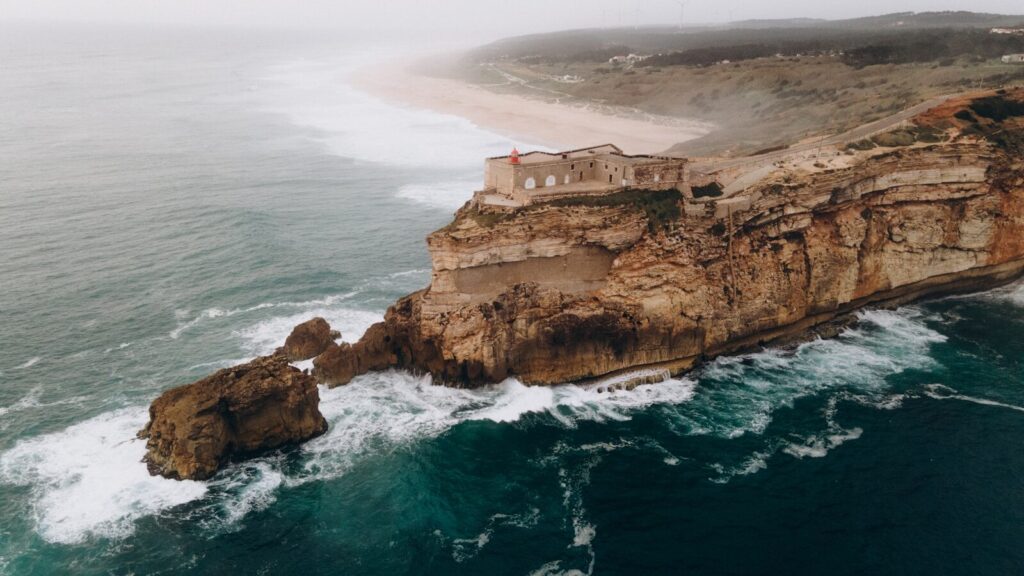
Nazaré and nearby coastal towns, ocean-focused, seasonal swings
- Who it suits: beach lovers, people who want coastal atmosphere
- Vibe: ocean-first, tourism in peak season
- Price level: varies widely
- Commute: reasonable access along the coast
- Pros: beaches, seafood, iconic coastline
- Cons: crowds in season, some areas feel very tourist-forward
The honest truth, what nobody tells you
Blunt realities that save Americans from disappointment.
- Winter feels colder indoors than you’d expect. Many homes have limited insulation and heating.
- Fix: prioritize heating, dehumidification, and insulation when house-hunting.
- Paperwork becmes a lifestyle. Visas, banks, utilities, and registrations take time.
- Fix: keep a digital folder with every document and repeat copies.
- English is common, not guaranteed. Smaller towns will test your Portuguese.
- Fix: learn basic Portuguese and choose a location that matches your comfort level.
- Timelines run differently. Contractors, deliveries, and admin tasks may move slower than US expectations.
- Fix: build buffers into every plan.
- Not every “great deal” is legally clean. Documentation matters.
- Fix: verify permits, boundaries, and renovation history.
- A car may become your freedom tool. Public transit exists, but it may not match US convenience.
- Fix: pick location with your transport plan in mind.
- Your social life won’t build itself.
- Fix: join groups in your first month and say yes to invitations.
- You’ll still spend money. Portugal can be more affordable overall, but private school, travel, and lifestyle upgrades add up fast.
- Fix: build a real budget that includes US visits.
Climate and lifestyle
The Silver Coast has an Atlantic climate. ocean breezes, genuinely beautiful summers, and humidity in many areas.
Day-to-day, this means you should plan for:
- Plan for layers and rain gear in cooler months
- A home setup that handles humidity comfortably
- A lifestyle where outdoor living is a real part of your routine, not an occasional
Pros and cons at a glance
| Pros | Cons |
|---|---|
| More space and value than Lisbon/Porto in many areas | Some towns feel quiet if you want constant nightlife |
| Coastal lifestyle with authentic Portuguese communities | Humidity and home heating can surprise newcomers |
| Good fit for remote work and slower, healthier routines | Paperwork and admin processes takes real time |
| Private healthcare can be accessible and affordable vs US | English isn’t guaranteed in every service situation |
| Real variety of towns: coastal energy and inland calm | A car is often needed depending on where you live |
How we at Fox Real Estate can help you
Relocating isn’t just choosing a town, it’s aligning visa strategy, housing, budget, and timelines so the move feels controlled instead of chaotic. That’s the part most guides (including, until this rewrite, our own) leave out.
We help Americans relocate to Portugal’s Silver Coast by:
- Finding the right properties to buy or rent based on your actual lifestyle and budget, not just what’s trending on Instagram
- Guiding your search with practical, street-level neighborhood knowledge across the Silver Coast
- Coordinating with trusted professionals to help facilitate the immigration and visa process, vetted mortgage brokers so you’re not juggling five different professionals on your own
If you want extra confidence, review client experiences on Fox Real Estate’s testimonial page.
FAQs
-
Is the Silver Coast a good place for Americans to live in Portugal?
Yes, for many Americans it is a strong fit because it offers coastal living, authentic Portuguese towns, and more space for the money than Lisbon in many areas. The best experience comes from choosing a town that matches your daily routine and being realistic about paperwork, language, and transportation.
-
Do I need a car on the Silver Coast?
Often, yes. If you live in a walkable town center, you may be able to handle daily errands on foot, but a car makes beach access, shopping, and exploring much easier. If you choose a rural home or a neighborhood outside town, a car becomes close to essential.
-
How much does it cost to live on the Silver Coast compared to US cities?
It depends on housing and lifestyle, but many Americans find day-to-day costs lower than major US cities like New York or Los Angeles. A realistic couple’s budget can range from roughly $2,800 to $8,000+ per month, depending on rent or mortgage, private schooling, travel back to the US, and comfort level.
-
Can Americans buy property in Portugal?
Yes. Americans can buy property in Portugal, but the process is documentation-heavy and it is important to verify legal status, permits, and boundaries. A local team helps you avoid common traps like unclear renovation history or assumptions about utilities, insulation, and humidity in coastal homes.
-
Which visa is best for Americans moving to Portugal?
There is no one best visa. Many people explore the D7 for stable income, the Digital Nomad route for remote work, and investment options like the Golden Visa depending on the rules at the time. Because requirements change, confirm eligibility and timelines with qualified immigration professionals before committing.
-
Is healthcare in Portugal good for expats?
Healthcare can be excellent, especially if you use private providers for routine care. Costs often feel more predictable than the US, but expectations matter. Public system wait times can exist for certain specialties, and English is not guaranteed everywhere. Planning insurance and your first provider appointments early makes the transition smoother.
-
Are there international schools near the Silver Coast?
There are options, but availability depends on the exact town and commuting tolerance. When evaluating schools, ask about curriculum, language, admissions timelines, and support for new students. For many families, school choice is the deciding factor that sets the “right” home base.
-
What are the biggest mistakes Americans make when relocating to Portugal?
Common mistakes include choosing a location based on vacation vibes, underestimating winter comfort and humidity, buying a car too early, and treating visas and banking as last-minute tasks. A structured plan and a local team reduce these risks and help you make decisions in the right order.
-
What’s the difference between the D7 and D8 visas?
The D7 is generally for people with passive or stable income not tied to being physically in Portugal (pensions, dividends, long-term contracts). The D8 is for people who continue working remotely for a foreign employer or their own foreign-based business while living in Portugal.
-
Is NHR still available for new applicants?
The original NHR tax regime was discontinued for new applicants starting in 2024. A narrower replacement incentive (often called “NHR 2.0,” tied to scientific research, innovation, and specific qualifying professions) exists instead, it does not automatically cover retirees or general remote workers.
-
Do I need to buy real estate to get a Portuguese Golden Visa?
No. As of October 2023, real estate purchases no longer qualify for the Golden Visa. Current routes are generally fund-based investment, business/job-creation investment, or qualifying donations.



0 Comments