
Table of Contents
Understanding the True Cost of Living in Portugal
If you’re considering relocating to Portugal, one of your first questions is probably: “How much will it actually cost to live there?” The cost of living in Portugal varies significantly depending on which city or region you choose, your lifestyle preferences, and whether you’re renting or buying property.
Portugal has become one of Europe’s most attractive destinations for a variety of people from different profiles, offering a high quality of life at a fraction of the cost you’d pay in London, Paris, or New York. But the financial reality can differ vastly between Lisbon and Porto’s cosmopolitan neighbourhoods and the charming towns in the interior of the country or the seaside towns of the Algarve.
In this comprehensive guide, we’ll break down the real cost of living in Portugal’s major cities in 2026, covering everything from housing and utilities to groceries, transportation, and entertainment. Whether you’re planning to settle in Lisbon, Porto, the Algarve, or one of Portugal’s emerging expat hotspots, you’ll get a clear picture of what to budget for your new life in Portugal.

Portugal From North To South
Tucked along the western edge of Europe, Portugal is a compact yet remarkably diverse country where landscapes shift dramatically within a few hours or sometime minutes’ drive.
From the lush, hilly north, to the mountainous Eastern Central region, home to the country’s highest peaks in the Serra da Estrela, to the Lisbon region to the rolling plains of the Alentejo and the golden coastline of the Algarve, Portugal offers an extraordinary range of environments in a territory just over 92,000 km². With more than 800 km of Atlantic coastline, a low population density outside its main urban centers, and vast rural interiors still shaped by agriculture and tradition, the country balances vibrant city life with open space, nature, and coastal living.
The following breakdown gives you an idea of the main regions that form Portugal and where more foreigners will want to live. There are other remote places like Bragança in the Trás-os-Montes area that we won’t cover to keep the focus on where 95% of the people coming to Portugal will settle in.
1. Green Coast (Costa Verde)
- Focus & Character: Lush, traditional, slow-paced, authentic and significantly more affordable than the south. The weather boasts cooler and rainier winters and summer can be more unpredictable along the coastline.
- Key Towns: Viana do Castelo, Caminha.
- Lifestyle: Known for its Atlantic breezes and Vinho Verde vineyards. It is ideal for those seeking nature and a tranquil way of living. Proximity to Spain is attractive to some as you can easily cross the border and have lunch the Spanish way. Most places will be within a 1 hour drive from downtown Porto.
2. Porto and Greater Porto
- Focus & Character: Portugal’s second-largest metropolitan area with historic architecture, a thriving food and wine scene, and strong local identity. Beyond the city, the Douro Valley’s vineyards, Atlantic beaches, and green inland landscapes provide diverse lifestyle diversity within a short driving distance.
Porto combines international connectivity, competitive property pricing compared to Lisbon, and a vibrant but livable urban scale that continues to attract professionals, families, and investors alike. It’s currently experiencing a booming tech scene.
- Key Towns: Porto, and its 16 surrounding municipalities, Arouca, Espinho, Gondomar, Maia, Matosinhos, Oliveira de Azeméis, Paredes, Póvoa de Varzim, Santa Maria da Feira, Santo Tirso, São João da Madeira, Trofa, Vale de Cambra, Valongo, Vila do Conde, and Vila Nova de Gaia. Foz do Douro is increasingly attracting people as a place to relocate to.
- Market Insight: Many clients now hesitate between Porto and Gaia; the latter offers brand-new buildings with ocean or river views at a slightly better value.
3. Silver Coast (Costa de Prata)
- Focus & Character: The “New Algarve,” favored by surfers and families seeking community.
Stretching north of Lisbon along a dramatic Atlantic coastline, the Silver Coast has quietly become one of Portugal’s most compelling regions for long-term residents. Known for its expansive beaches, authentic towns, and lower density living, the area offers space, value, and quality of life without sacrificing accessibility to the capital. World-class golf courses such as Praia D’El Rey and Royal Óbidos anchor a growing lifestyle community, while Nazaré’s record-breaking waves have placed the region firmly on the global map. With improving infrastructure and rising international interest, the Silver Coast is transitioning from a holiday destination to a serious relocation contender.
- Key Towns: Nazaré, Peniche, Óbidos, Caldas da Rainha and Lourinhã.
- Real Estate: A growing hotspot where families find “happy places” between the rugged cliffs, stunning ocean views and medieval charm.
4. Lisbon & Greater Lisbon
- Focus & Character: Lisbon and its surrounding municipalities, Cascais, Oeiras, and Sintra form Portugal’s most dynamic and internationally connected region.
Here, historic architecture meets innovation, embassies sit alongside tech hubs, and a globally recognized food scene ranges from traditional tascas to Michelin-starred restaurants. Within 20–30 minutes, residents access some of Europe’s most scenic coastline: surf beaches along the Cascais line (known as the “linha” in Portuguese) and Costa da Caparica, refined seaside living in Cascais, and the lush, protected hills of Sintra. With strong infrastructure, international schools, and year-round lifestyle appeal, remains the country’s premier choice for relocation..
- Key Towns: Lisbon and its historical neighbourhoods, Parque das Nações, Oeiras, Cascais and Sintra.
- Appeal: Access to more
5. The Riviera, Cascais and Sintra
- Focus & Character: Cascais and Sintra offer two distinct yet complementary lifestyles within the Greater Lisbon region. Cascais blends refined coastal living with international sophistication, a marina town known for elegant villas, luxury condos, fine dining, championship golf courses, and easy access to surf-friendly beaches along the Atlantic.
Just inland, Sintra presents a different rhythm: lush hills, historic estates, and UNESCO-protected landscapes that feel worlds away from the capital. Together, they combine natural beauty, architectural heritage, strong international appeal, and enduring property value, making the area one of Portugal’s most prestigious and desirable addresses for relocation.
- Key Towns: Cascais, Estoril, Monte Estoril and Sintra.
- Appeal: A prestigious coastline stretching from the capital to the “Fairytale” palaces of Sintra.
6. Margem Sul & Setúbal (South of Lisbon’s emblematic bridge)
- Focus & Character: The Margem Sul, just across the Tagus from Lisbon, is increasingly on the radar of discerning international buyers seeking space, nature, and coastal authenticity without sacrificing access to the capital. Costa da Caparica offers miles of sandy beaches popular with surfers and year-round residents alike, while nearby Aroeira is known for its established golf courses, pine forests, and private villa communities. Fonte da Telha remains a local favorite for relaxed beach walks and to grab lunch, feet in the sand. Azeitão brings wine estates and countryside charm with the Serra de Arrábida on its doorstep, while Setúbal and Sesimbra combine working fishing towns with stunning Atlantic scenery at under 1 hour drive from Lisbon. The Margem Sul delivers lifestyle depth, relative value, and growing long-term appeal.
- Key Towns: Setúbal, Almada, Azeitão.
- Vibe: Rapidly growing in popularity for those who want the Lisbon lifestyle without being in the city center.
7. The Luxury “Wild”, Alentejo Coast or Costa Vicentina
- Focus & Character: The Alentejo, Portugal’s largest province, is defined by scale, serenity, and understated luxury. Vast plains, cork forests, and an unspoiled Atlantic coastline create a landscape where space and privacy are part of daily life. Along the coast, Comporta and Melides have emerged as discreet international enclaves, attracting design-led developments and ultra-private estates, including projects such as Six Senses, while preserving their low-density character. Inland, towns like Grândola and Évora reflect a slower, more traditional rhythm rooted in agriculture, heritage, and authenticity. Further south, Vila Nova de Milfontes anchors the Costa Vicentina with dramatic cliffs and protected beaches. The Alentejo offers contrast, barefoot luxury by the sea and timeless simplicity inland.
- Key Towns: Comporta, Melides.
- Exclusivity: Known for wild Atlantic dunes and high-end privacy.
8. The Algarve and the Golden Coast
- Focus & Character: The Algarve, Portugal’s southernmost region, combines climate, infrastructure, and international accessibility. With over 300 days of sunshine per year, dramatic limestone cliffs, expansive sandy beaches, and protected natural parks, it offers both visual impact and practical lifestyle appeal. Faro International Airport provides strong year-round connectivity across Europe and seasonal transatlantic routes, supporting a well-established expatriate and second-home community. From luxury resorts and golf communities to authentic fishing towns and low-density eastern villages, the Algarve delivers diversity within a compact geography, making it equally attractive for relocation, retirement, or long-term investment.
- Key Towns in Western Algarve: Vilamoura, Quinta do Lago, Lagos: Resort-style living, championship golf, marina lifestyle, international schools, established expat hubs and Eastern Algarve: Faro, Loulé, Tavira, Olhão, Fuseta: Lower density, traditional character, Ria Formosa landscapes, authentic village atmosphere with growing long-term resident appeal.
- Exclusivity: Known for its great golf courses, sundrenched beaches, quality resorts and safety.
Real Estate Costs: Buying & Renovating in 2026
Portugal’s property market remains diverse, nuanced, and highly regional.
Prime areas of Lisbon, Cascais & Estoril, Comporta and parts of the Algarve typically range from €6,000 to €12,000 per sqm, while Porto and emerging coastal markets often sit between €3,500 and €6,000 per sqm. Interior and rural regions can start closer to €1,500–€3,000 per sqm, depending on condition and infrastructure.
Long-term rental yields vary by location, with central Lisbon and Porto commanding premium monthly rents, while secondary cities and coastal towns offer stronger entry pricing.
Buyers should also factor in acquisition costs: IMT (property transfer tax), stamp duty, notary and land registry fees, annual IMI (municipal property tax), and legal fees to conduct due diligence and represent their interests.
In short, the headline price is only part of the equation but when structured correctly, the market remains accessible relative to comparable North American urban centers.
| Property Type | Estimated Cost / m² (National Avg) | Commentary |
|---|---|---|
| Brand New Development in Lisbon, Porto and the Algarve | €7,000+ | Modern amenities, energy efficiency, high-end contemporary finishings, immediate move-in.Highest purchase price, long term value and higher yield considering the low inventory of luxury property. |
| Recently Remodeled | €2,800 – €7,000+ | Character features with updated plumbing/electric. May still have older insulation or layout issues. Mind planning permission. |
| Project (To Remodel) | €1,100 – €2,500 | Highest potential for ROI; customized to your taste.Higher level of stress; requires local pool of contractors and a dedicated project manager. |
Housing Costs: Rent vs. Buy in Portugal’s Major Cities and Regions
The Lisbon District. Portugal’s Capital and Most Expensive City
As Portugal’s capital and largest city, Lisbon commands the highest housing costs in the country. The cost of living in Portugal’s capital reflects its status as an international business hub and cultural centre.
Rental Prices in Lisbon (2026):
- 1-bedroom apartment in city centre: from €1,200/month
- 1-bedroom apartment outside centre: from €800/month
- 2-3-bedroom apartment in city centre: from €1,800/month
- 2-3-bedroom apartment outside centre: from €1,300/month
Property Purchase Prices in Lisbon:
- Price per square meter in city center for remodelled properties average the € 6,000 mark
- Price per square meter outside Lisbon average the €4,000
The above price per square meters are indicative for properties recently remodelled although it is complex to give a base figure per square meter for such a large region. Neighborhoods like Chiado, Príncipe Real, and Estrela (that includes Lapa and Santos) command premium prices.
In terms of property types, Lisbon’s real estate inventory offers many more apartments and condos than townhouses.
At the moment in Lisbon, most 1-bedroom apartments that have been recently remodelled, of more or less 50 square meters, have an asking price above 350,000€.

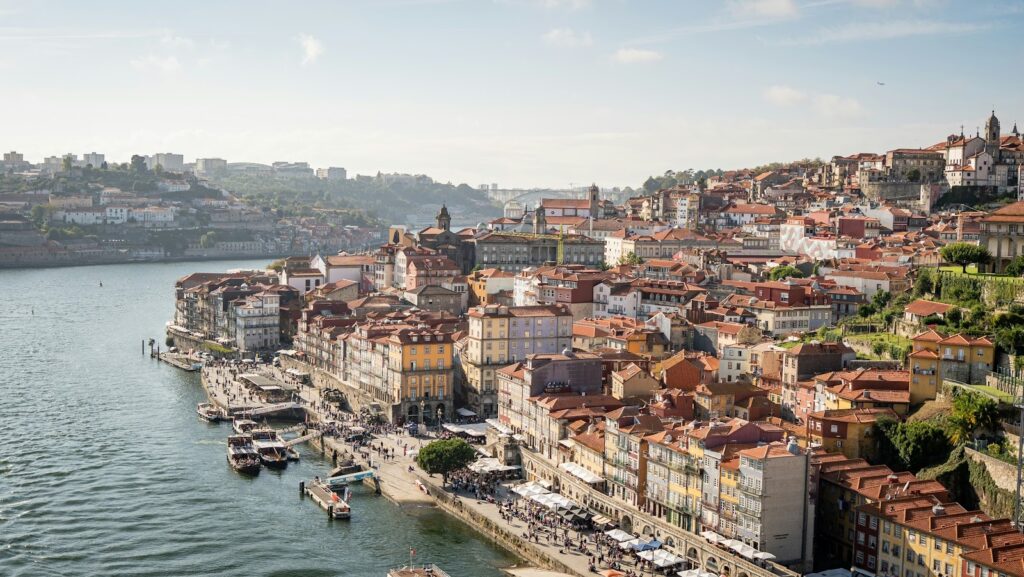
Porto: Quality of Life at Lower Costs
Porto offers a compelling alternative to Lisbon, with lower housing costs and an equally vibrant cultural scene. Many international professionals find Porto’s cost of living in Portugal more manageable while still enjoying urban amenities.
Rental Prices in Porto (2026):
- 1-bedroom apartment in city centre: from €900/month
- 1-bedroom apartment outside centre: from €700/month
- 2-3-bedroom apartment in city centre: from €1,600/month
- 2-3-bedroom apartment outside centre: from €1,200/month
Property Purchase Prices in Porto:
- Price per square meter in city centre: from €3,500
- Price per square meter outside centre: from: €2,500
The Algarve: Coastal Living at a Premium
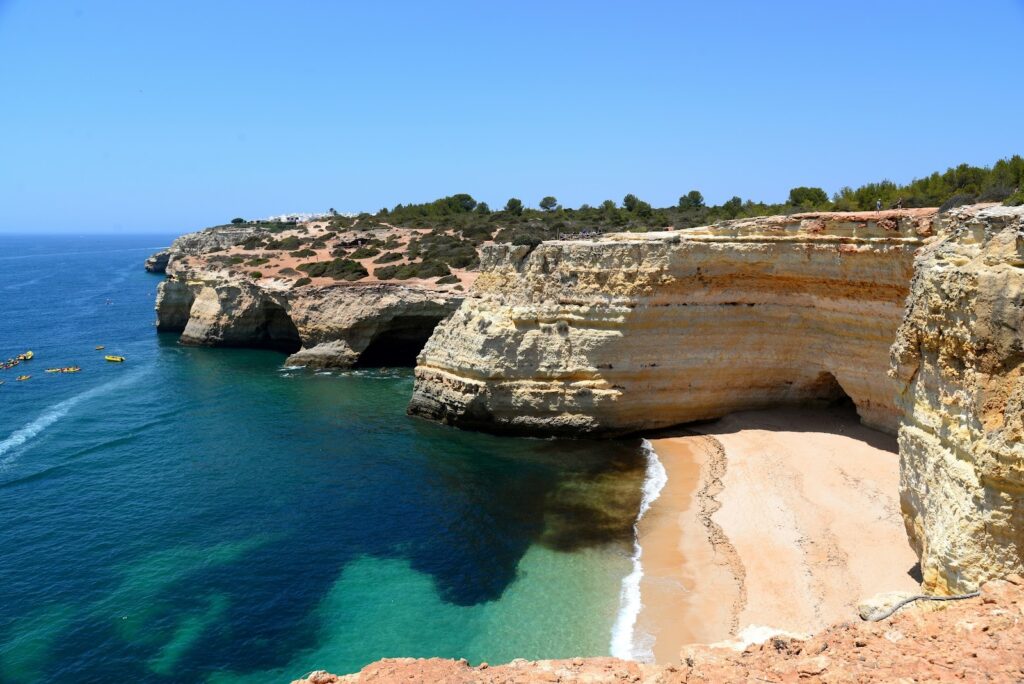
The Algarve region, particularly popular with UK and Northern European expats, offers stunning beaches and year-round sunshine. However, prime coastal locations come with higher price tags.
Rental Prices in the Algarve (2026):
- 1-bedroom apartment in coastal areas: from €800/month
- 1-bedroom apartment inland: from €600/month
- 3-bedroom villa near the coast: from €2,000/month
- 3-bedroom property inland: from €1,200/month
Property Purchase Prices in the Algarve:
- Price per square meter in coastal areas (Lagos, Albufeira, Vilamoura): €3,500-€6,000
- Price per square meter inland: €2,000-€3,000
Emerging Expat Destinations: Braga, Coimbra, Tomar and Caldas da Rainha
Braga and Coimbra offer significantly lower housing costs (30-40% less than Lisbon) while providing excellent universities, healthcare, and cultural amenities.
The interest for Tomar and the surrounding region is growing, while Caldas da Rainha has suddenly become the capital of the Silver Coast, attracting many new residents.
Monthly Living Expenses Beyond Housing
Excluding the cost of housing, either paying rent or a mortgage, in 2026, a single professional can live comfortably in Portugal for €1,500–€2,500/month, while families should budget €3,000–€5,000/month, depending on the family size.
Utilities and Internet
Utility costs in Portugal are reasonable compared to other Western European countries.
Average Monthly Utilities (2026):
- Electricity, heating, cooling, water, garbage (85m² apartment): €80-€150
- Internet (fibre optic, unlimited data): €35-€60
- Mobile phone plan (unlimited calls/data): €15-€30
Note that electricity costs have increased in 2024-2026.
Shopping Habits: Online vs. In-Store
- In-Store: The Portuguese still value “café culture” and local markets for fresh produce, where prices are competitive.
- Online: While Amazon.es (Spain) is the primary hub for many, local online retailers like Worten (add URL) and FNAC (add URL) are standard for electronics. Delivery is generally efficient, but “last-mile” logistics in rural regions can sometimes follow the “Amanhã” (tomorrow) culture.
Groceries and Food Costs
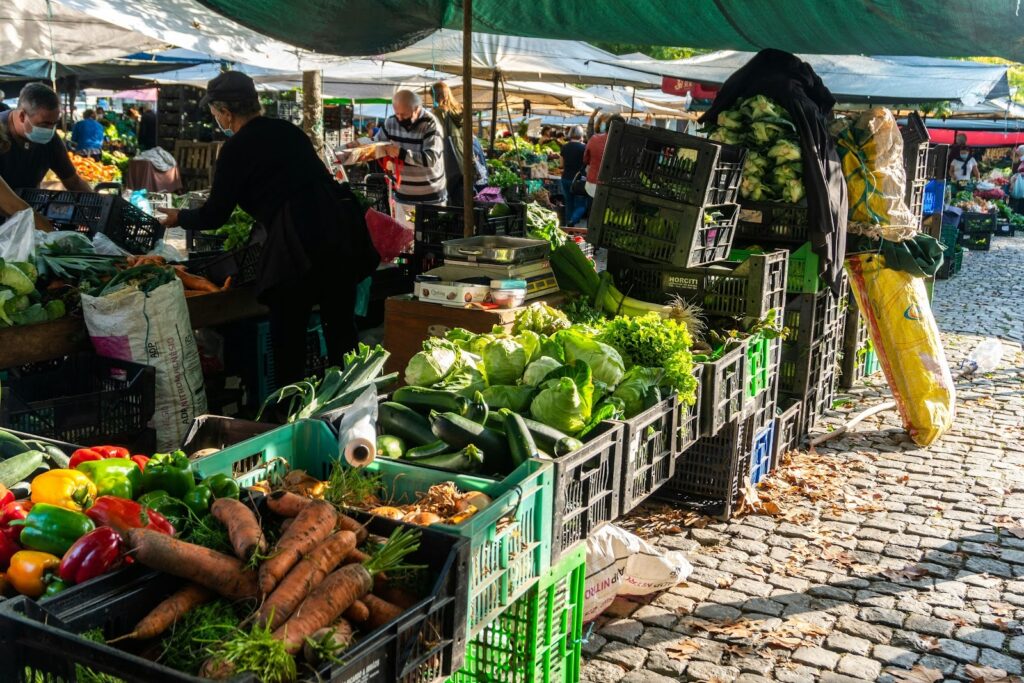
Food costs in Portugal remain affordable, especially if you shop at local markets and independent grocery stores. Popular supermarket chains are Pingo Doce, Continente and Auchan. In recent years, hard discount chains such as Lidl and Aldi have become favourites among the Portuguese for their competitive prices.
It’s easy to purchase organic products in Portugal, many towns or cities welcome weekly farmers’ markets and supermarket chains like Miosótis and Celeiro make buying organic convenient.
Average Monthly Grocery Costs (for 2 people):
- Budget-conscious shopping: €250-€350
- Moderate spending: €400-€550
- Premium/international products: €600-€800
Sample Prices (2026):
- Loaf of bread: €1.00-€1.50
- Dozen eggs: €2.50-€3.50
- 1kg chicken breast: €6.00-€8.00
- 1 litre milk: €0.80-€1.20
- 500 gr local cheese: €8.00-€12.00
- Bottle of wine (mid-range): €4.00-€8.00
Dining Out, Entertainment & Culture
Portugal offers excellent value for dining out, though prices vary significantly between touristy areas and local neighbourhoods and the country offers many fine dining options as well as Michelin starred restaurants.
Restaurant Costs (2026):
- Inexpensive restaurant meal: €8-€12
- Mid-range restaurant (3-course for 2): €40-€70
- Domestic beer (0.5L draft): €2.50-€4.00
- Cappuccino: €1.50-€2.50
- Movie Theater: A standard ticket in 2026 is approximately €8.75–€10.00.
- Museums & Monuments: As of 2026, residents with a NIF can visit 37 national museums and palaces (like the Mosteiro de Alcobaça or Soares dos Reis) for free on 52 days per year, any day of the week.
Transportation Costs
Public transportation in Portugal is efficient and affordable, particularly in Lisbon and Porto.
Buying a car in Portugal remains more expensive than in neighboring Spain due to high registration taxes (ISV), though 2026 has brought relief for eco-friendly imports.
- New vs. Second-Hand: New cars in Portugal carry high taxes (ISV), but they come with full warranties. Second-hand cars (especially those under 5 years old) hold their value remarkably well, making them relatively expensive compared to other EU countries.
- New Cars: A standard hatchback starts around €25,000–€30,000.
- Second-Hand: Used cars hold their value exceptionally well in Portugal, meaning a 3-year-old vehicle might only be 20% cheaper than a new one.
- EV Incentives: The 2026 government budget continues to support the energy transition.
- Purchase Bonus: Individuals can receive up to €4,000 for a new EV when scrapping a fossil-fuel vehicle over 10 years old.
- Tax Exemptions: Fully electric vehicles are exempt from ISV (Registration Tax) and IUC (Annual Road Tax).
- Business Advantage: Companies can deduct 100% of the VAT on EVs costing up to €62,500.
- Subsidies: For 2026, the government offers subsidies of €4,000–€5,000 for new electric vehicle purchases (if scrapping a car older than 10 years). EVs are also exempt from annual road tax (IUC).
Car Ownership Costs:
- Gasoline (1 litre): €1.70-€1.90
- Car insurance (comprehensive): €400-€800/year
- Annual vehicle tax: €20-€300 (depending on vehicle emissions)
- Monthly parking in city centre: €80-€150
Mass Transport
- Passes: Monthly passes for Lisbon or Porto (Navegante/Andante) are a bargain at €30–€40/month.
- Lisbon: €40 (unlimited metro, bus, tram within city limits)
- Porto: €40 (unlimited metro and bus)
- Other cities: €30-€35
- Trains (CP): High-speed trains (Alfa Pendular) connect Lisbon to Porto in under 3 hours for approximately €25–€45 depending on how early you book.
Many expats find they don’t need a car if living in Lisbon or Porto, but car ownership becomes more practical in the Algarve or smaller towns.
Healthcare and Insurance Costs
While Portugal offers universal public healthcare through the SNS, 2026 figures show that nearly 30% of household healthcare spending is now directed toward the private sector for faster access to specialists, English-speaking doctors and specialized care.
While the public SNS system is available to residents for small co-pays (approx. €5–€15), most expats opt for private insurance to avoid long wait times.
- Private Healthcare Costs: A standard initial appointment in a private clinic typically costs between €30 and €50, while specialized dental cleanings are approximately €30.
- Health Insurance: Most expats opt for private insurance to bypass public wait times.
- Basic Plans: Start as low as €10–€25 per month for young adults.
- Comprehensive Coverage: Middle-aged adults should budget €50–€150 per month, while seniors (55+) may see premiums starting at €100, reaching €300 for top-tier plans.
- Family Discounts: Bundled plans for a family of four often provide significant savings compared to individual policies.
- Mandatory Insurances: If you purchase property, basic housing insurance is required, costing roughly €80–€100 per year.
- Traditional Insurance: Most residents also carry multi-risk home insurance (mandatory for mortgages) and third-party car insurance.
Healthcare Costs (2026):
- Private health insurance (comprehensive): €50-€150/month per person
- GP visit (private): €50-€80
- Specialist visit (private): €80-€150
- Prescription medications: Generally 30-50% less than US prices
If you’re a legal resident contributing to Portuguese social security, you’ll have access to the SNS at minimal cost. However, waiting times can be longer than in private care.
Education Costs for Families
Families relocating to Portugal need to consider education costs, which vary dramatically between public and private, Portuguese and international schools.
Education Options (2026):
- Public schools: Free (Portuguese curriculum)
- Private Portuguese schools: €300-€800/month
- International schools (British, American curriculum): €800-€1,500/month
- International school annual fees: €10,000-€25,000 + extras
Lisbon and Porto offer the most international school options but the Algarve has a handful of options too.
Total Monthly Budget: What Does It All Add Up To?
Here are realistic monthly budgets for different lifestyle scenarios in Portugal’s major cities:
Lisbon – Single Professional or Retired
- Rent (1-bedroom outside centre): €1,000
- Utilities & internet: €100
- Groceries: €250
- Transportation: €40
- Dining & entertainment: €300
- Health insurance: €80
- Total: €1,770/month
Porto – Couple Without Children
- Rent (2-bedroom outside centre): €1,200
- Utilities & internet: €120
- Groceries: €400
- Transportation: €80
- Dining & entertainment: €400
- Health insurance: €150
- Total: €2,350/month
Algarve – Family of Four
- Rent (3-bedroom villa inland): €1,500
- Utilities & internet: €150
- Groceries: €600
- Car expenses (fuel, insurance): €300
- Dining & entertainment: €500
- Health insurance: €250
- International school (2 children): €2,400
- Total: €5,700/month
These budgets don’t include property purchase costs, one-time relocation expenses, or irregular costs like travel and home furnishing.
Hidden Costs and Financial Considerations
When calculating the cost of living in Portugal, don’t forget these additional expenses:
Property Purchase Additional Costs
- IMT (property transfer tax): 6-8% of purchase price
- Stamp duty: 0.8% of purchase price
- Registration fees: €200-€300
- Legal representation (due diligence and promissory): around € 1,250
- Real estate agent fees: Typically paid by the seller
Residency and Legal Costs | Vary Depending on Visa Type
- Residence permit application
- NIF (tax number) application
- Legal assistance for residency
- Document translation and apostille
Annual Taxes for Residents
- IMI (property tax): 0.3-0.8% of property value annually
- Income tax: Progressive rates 14.5-53% (NHR of IFICI regime may offer benefits)
- Social security contributions: 11% of income for employees
Portugal’s official statistics portal provides detailed cost-of-living data, while the Portuguese government website offers information on taxes and residency requirements.
Cost Comparison: Portugal vs. Other Popular Expat Destinations
How does the cost of living in Portugal compare to other countries popular with international professionals?
Compared to the UK: Portugal is approximately 30-40% less expensive overall, with particularly significant savings on dining out, entertainment, and property prices outside London.
Compared to Spain: Portugal is roughly equivalent to Spain, with Lisbon similar to Barcelona in cost, though Portugal offers better value in smaller cities except for the real estate that has gone up higher in Portugal than in Spain.
Compared to France: Portugal is 25-35% less expensive than France, with considerable differences in lifestyle and dining costs.
Compared to the USA: Portugal offers 40-50% lower costs than major US cities, particularly for healthcare, education, and dining out.
Money-Saving Tips for Living in Portugal
Maximize your budget with these insider tips from long-term residents:
- Shop at local markets: Municipal markets (mercados municipais) offer fresh produce at 30-50% less than supermarkets.
- Eat like a local: Skip tourist restaurants and look for “prato do dia” (dish of the day) lunch specials for €7-10.
- Time your property search: Don’t jump on the first listing, take your time, compare and check out different neighbourhoods. .
- Consider the suburbs: Living 20–30 minutes from city centres can cut housing costs by 15-25% while maintaining an excellent quality of life.
- Use public transportation: Monthly passes offer unlimited travel and eliminate car ownership costs in major cities.
- Take advantage of NHR 2.0 (IFICI) tax benefits: The Non-Habitual Resident 2.0 regime offers a flat 20% tax rate for 10 years, it is only available under certain strict conditions (consult with a tax professional).
- Buy property strategically: Emerging neighbourhoods and smaller cities offer better value and strong appreciation potential.
How Fox Real Estate Helps You Find the Right Property in Portugal
Understanding the cost of living in Portugal is an important first step, but the real challenge is finding the right property to rent or purchase at the right price and in the right location. At Fox Real Estate, our core mission is simple: we help international professionals, families, and investors find any property that matches their needs anywhere in Portugal, whether it’s a long-term rental in Lisbon, a coastal home in Cascais, or a purchase opportunity in Porto, the Algarve, or beyond.
We act as your local partner on the ground, sourcing properties directly from our network, real estate portals, developers, and private owners to ensure you have access to the best options available on the market. If the right property isn’t publicly listed, we actively scout and negotiate on your behalf to secure it.
Our team provides comprehensive support throughout your relocation and property search journey:
- Personalized property search tailored to your budget, lifestyle, and relocation goals
- Active scouting of rental and purchase opportunities across Portugal
- Access to off-market and exclusive listings through our local network
- Transparent cost breakdowns, including taxes, fees, and long-term ownership or rental costs
- Neighbourhood and lifestyle insights to help you choose the right area
- Coordination with trusted legal, tax, and mortgage professionals
- Full relocation support, including visa and residency assistance where required
From the first consultation to signing the lease or deed, our role is to make sure you find the right home and move to Portugal with clarity and confidence.
Whether you are planning a relocation, exploring a scouting trip, or ready to secure a property, Fox Real Estate is here to guide you every step of the way.
Conclusion: Is Portugal Affordable?
Portugal remains one of the most attractive destinations in Europe for international professionals, retirees, and families, but affordability today requires a balanced and realistic perspective. Property prices, both for rentals and purchases, have increased in recent years, particularly in Lisbon, Cascais, Porto, the Algarve and other coastal areas, reflecting strong international demand and limited housing supply. At the same time, lifestyle and daily expenses such as food, dining out, transportation, and healthcare generally remain more accessible than in most Western European countries and major North American cities, which continues to make Portugal appealing to many people looking for a better quality of life.
Housing is now the main factor influencing the overall cost of living. Renting or buying in central Lisbon or prime coastal locations will naturally require a higher budget, while secondary cities and emerging regions such as Porto, Braga, Setúbal, or parts of the Silver Coast and the Algarve can still offer strong value and a comfortable lifestyle. The reality is that Portugal is no longer a “cheap” destination, but it remains a country where a well-planned move and a carefully selected property can provide excellent living conditions, safety, good infrastructure, and a relaxed Mediterranean lifestyle.
For a single professional, you can live comfortably in Portugal for €1,500-€2,500/month. Couples typically budget €2,500-€4,000/month, while families with children should plan for €4,000-€7,000/month depending on education choices.
The key to maximizing value is choosing the right location for your needs. While Lisbon offers the most international job opportunities, cities like Porto, Braga, and the Algarve provide excellent quality of life at lower costs. With careful planning and local guidance, you can enjoy Portugal’s exceptional lifestyle without breaking the bank.
For many internationals, the appeal of Portugal goes beyond pure affordability. The climate, walkable cities, access to the ocean, high-quality food, strong sense of community, and overall pace of life continue to position the country as a highly desirable place to live, work remotely, or invest in property. With the right expectations and proper planning, Portugal can still offer a balanced and sustainable lifestyle for individuals and families seeking stability and quality of life in Europe.
Finding the right property, whether to rent or buy, is often the key to making this balance work. Whether you are exploring your options or actively planning a move, having local expertise on your side makes all the difference in turning a Portugal relocation project into a well-informed and successful transition.

0 Comments